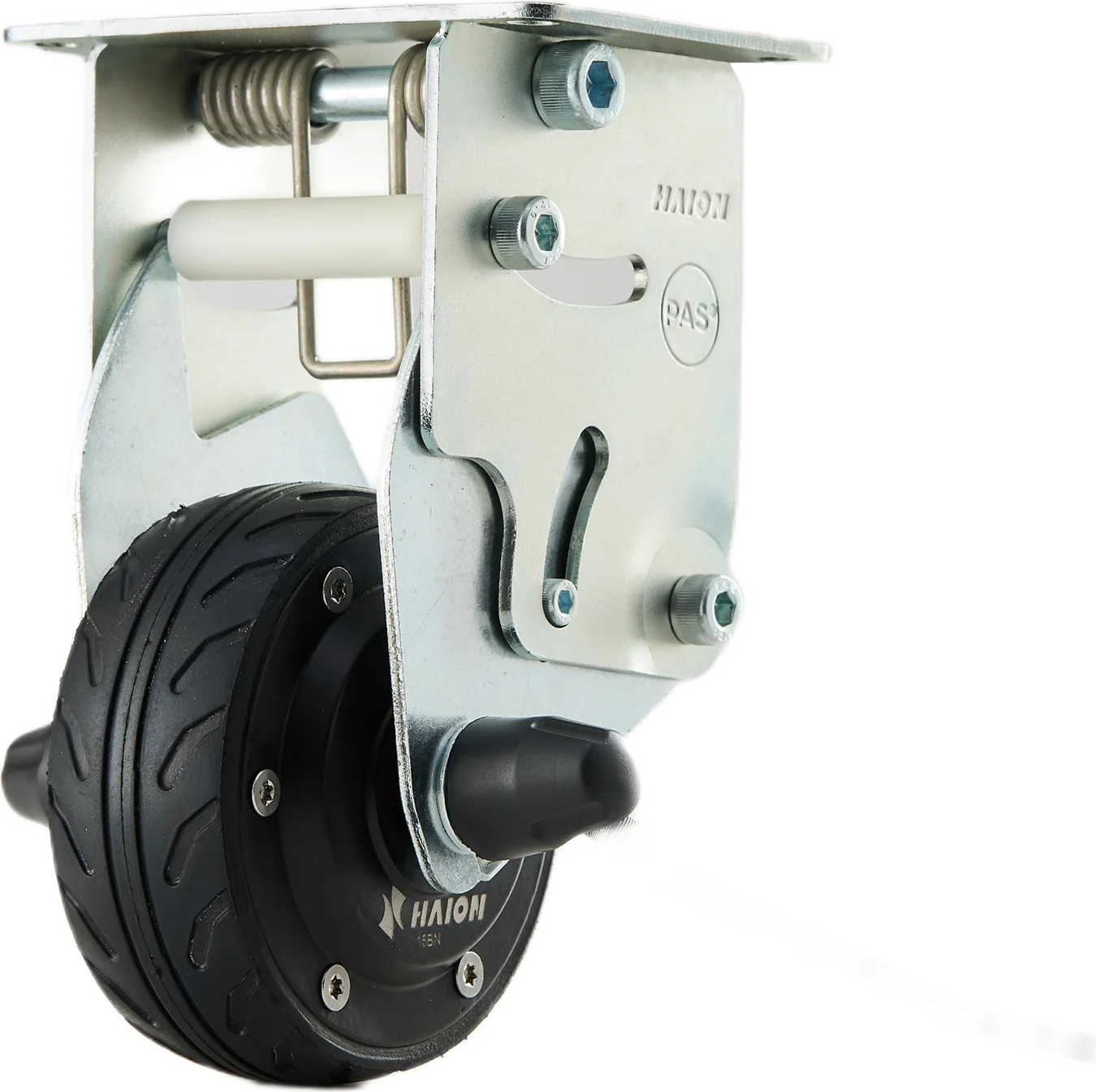
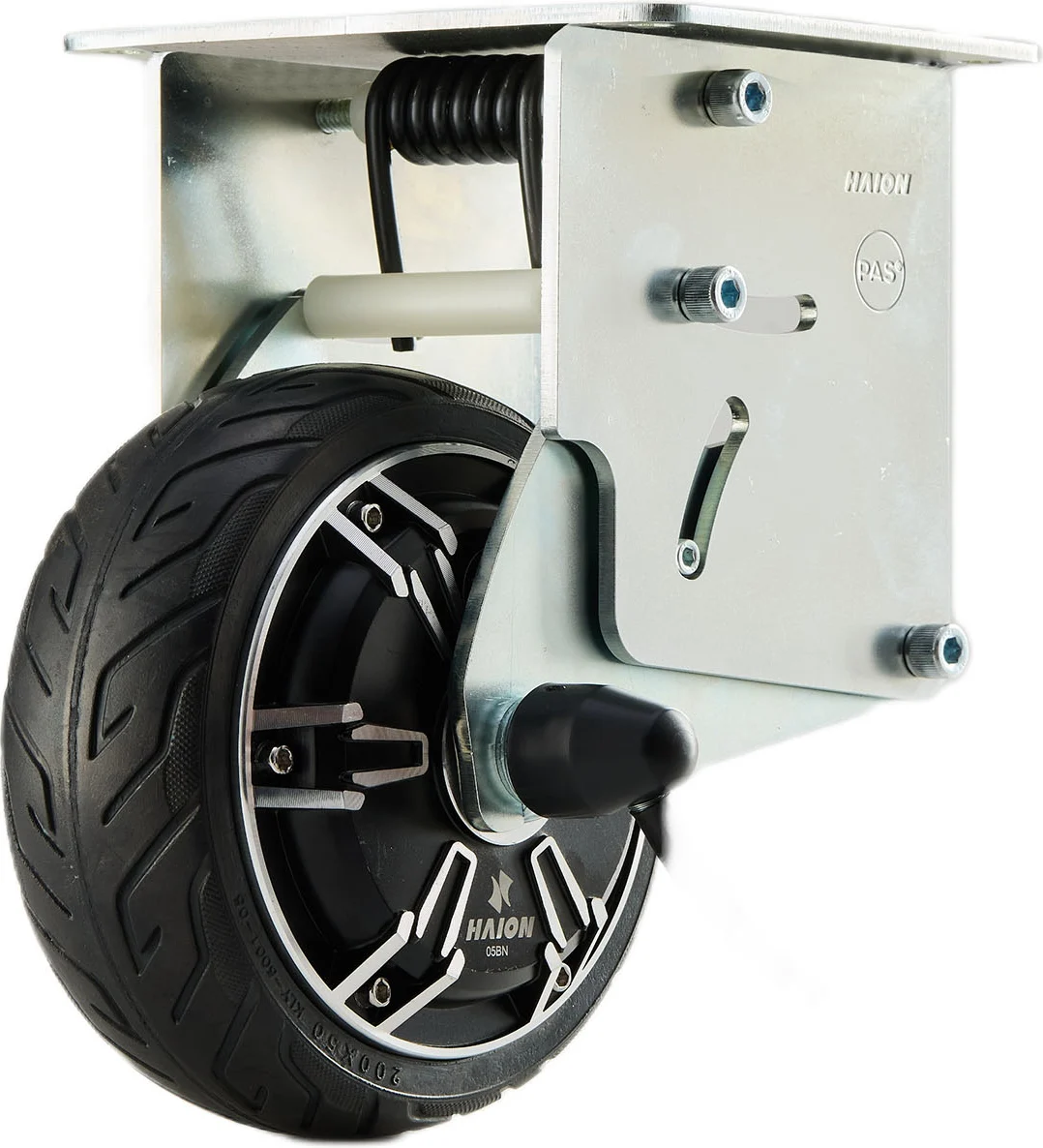
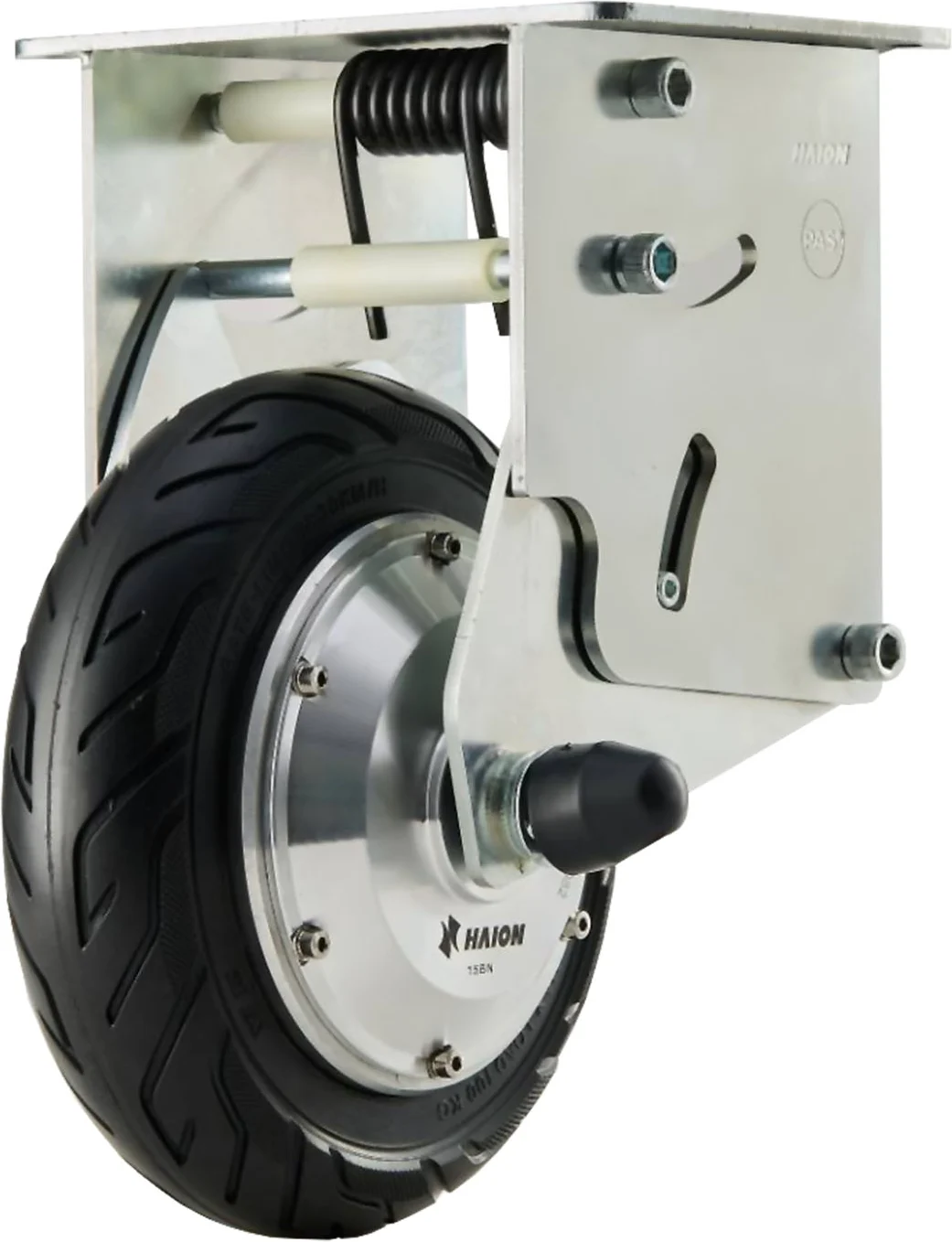
Motorized mobility
How to Select a Powered Wheel for a Cart
Select a powered wheel from route force, traction, duty cycle, controls, packaging and complete-cart validation requirements.
By HAION Engineering Knowledge TeamUpdated 2026-08-21Evidence: engineering-principle
DIRECT / 01Quick answer
Select a powered wheel by converting the worst route into force, torque, speed and energy requirements, then checking traction, mounting, braking, controls and duty cycle. Cart mass alone is not enough. The final system should be validated at worst-case payload, floor, slope and battery condition.
Build the requirement envelope
Document total mass, maximum slope, rolling resistance, thresholds, desired acceleration, target speed and cycles per shift. Calculate force and wheel torque for the combinations that can happen at the same time.
Check integration constraints
Confirm wheel diameter, swivel or fixed geometry, mounting load path, available space, battery voltage, controller current, braking and cable routing. Passive caster arrangement can either support or undermine steering.
Validate in stages
Bench-check drive direction and protection, then test low-speed handling, worst route, stopping, repeated duty and degraded battery conditions. Record results and limitations before publishing any performance claim.
Commercial referenceNeed a manufacturer configuration?
Knowledge content remains independent of product selection. For available commercial solutions, continue to the official HAION website.
Visit HAION Caster ↗