
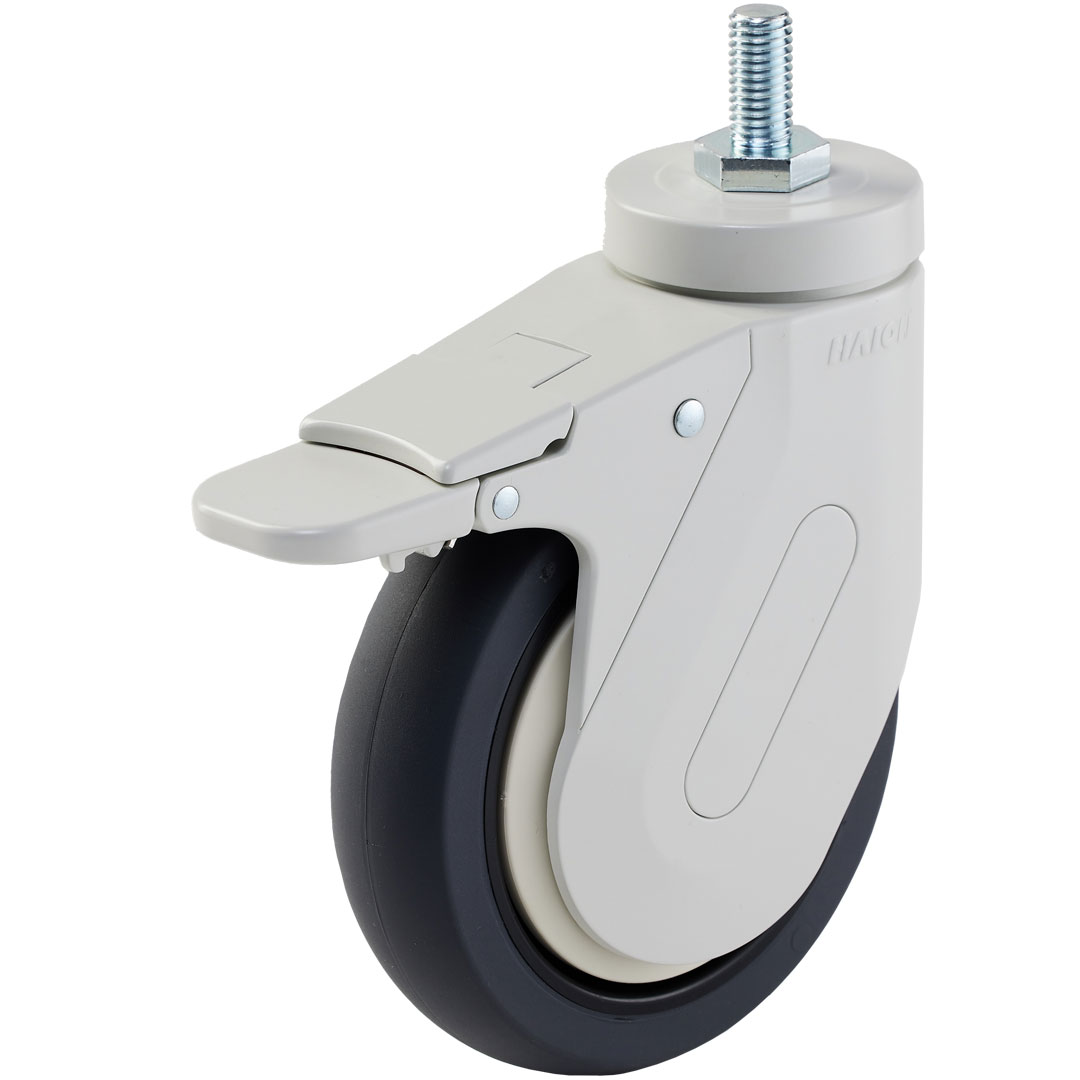
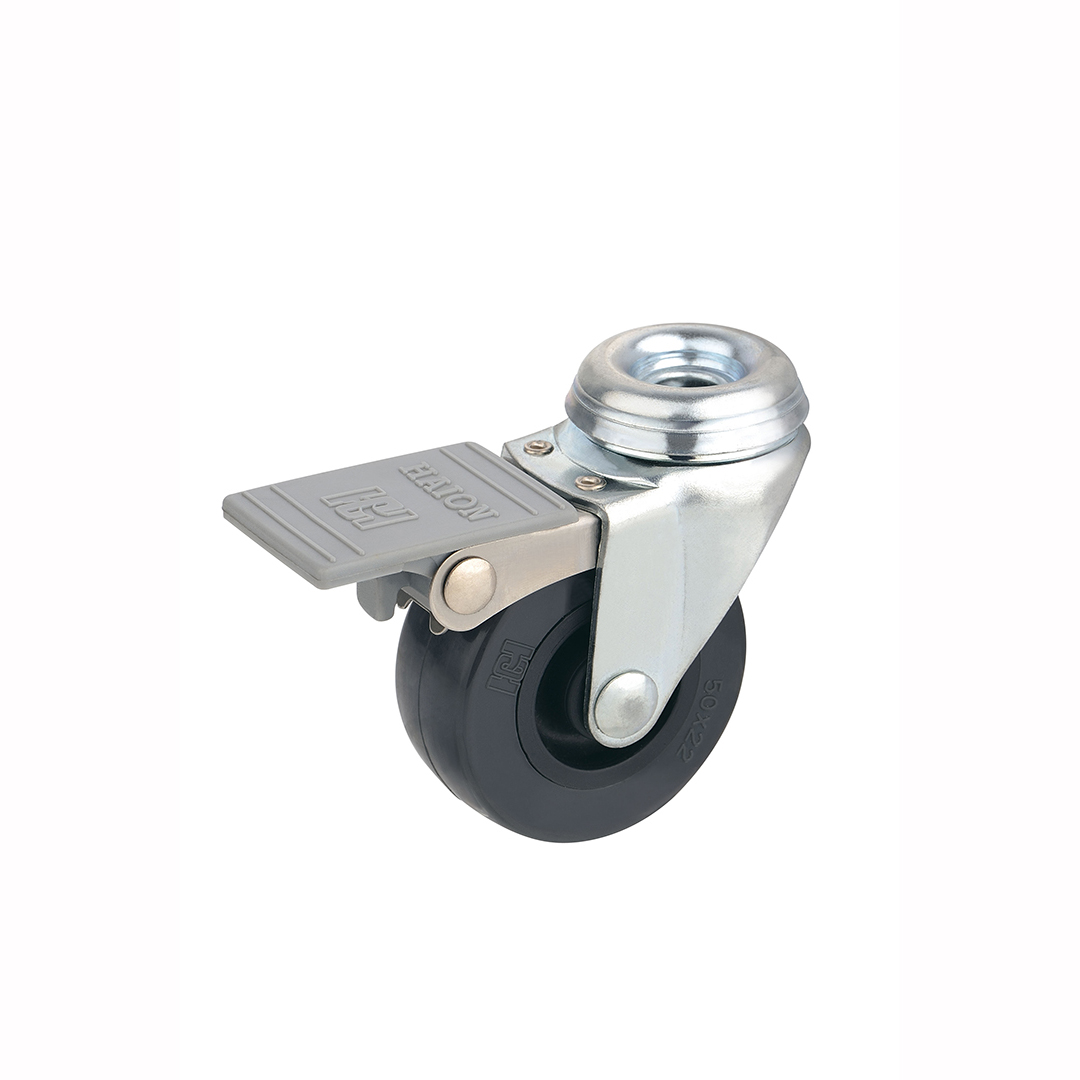
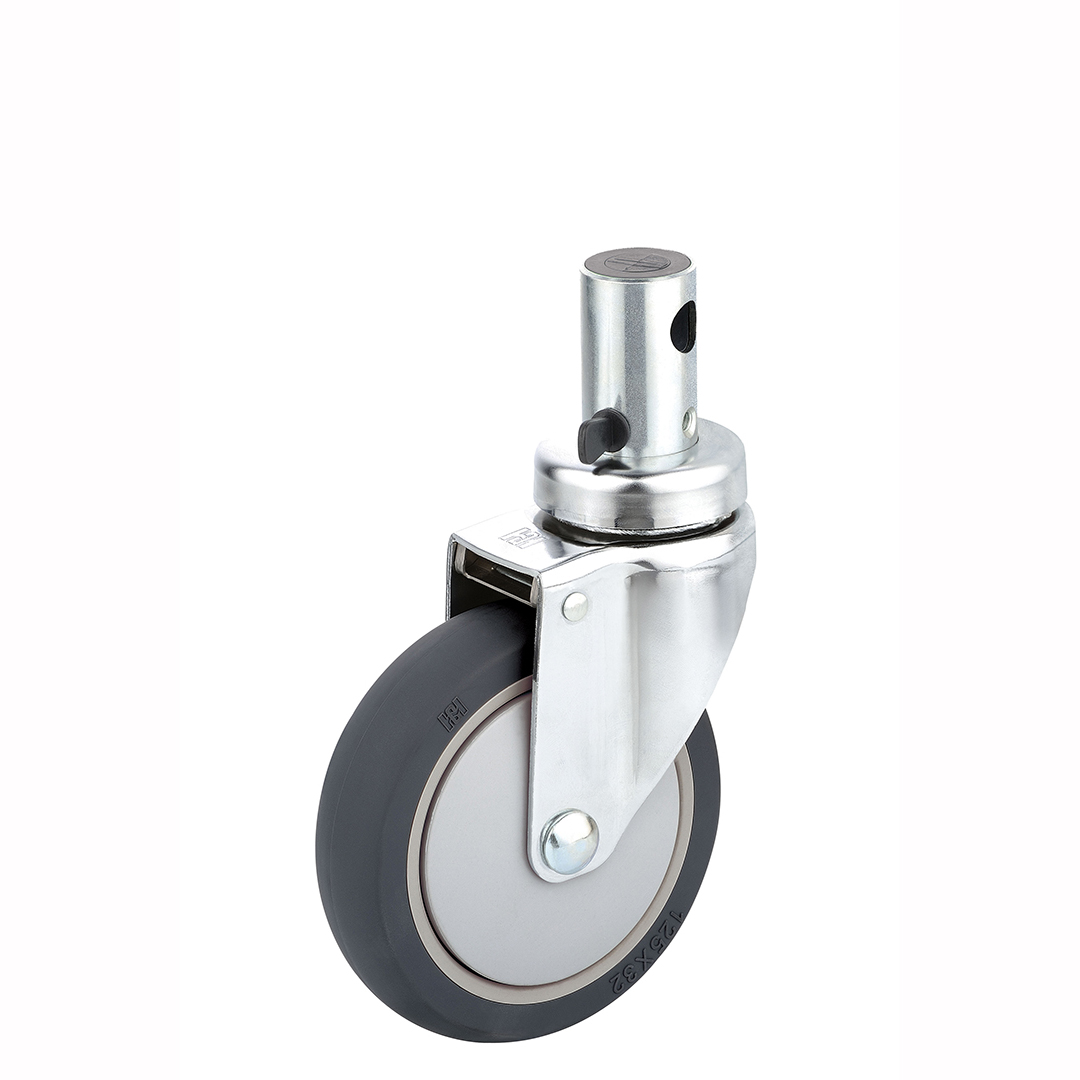
What makes a caster “medical”?
The term describes an application context rather than one universal construction. A bedside cabinet, diagnostic cart, hospital bed and patient stretcher impose different requirements. A caster becomes suitable only when its load rating, mounting, wheel, bearing, swivel geometry and control functions work with the equipment.
Which variables should be specified first?
Start with total mass, caster count, center of gravity, wheel diameter limits and the floor. Then define maneuverability, braking and directional-control needs. Cleaning agents, washdown exposure, noise, vibration and any electrical-resistance requirement should also be documented before a product is selected.
Common selection mistake
Choosing from load capacity alone can miss the forces created by thresholds, shock, braking and uneven floors. It can also overlook ergonomic push force. Treat the caster as part of the mobility system and validate the assembled equipment in its intended use.